A bouquet can say I love you, I'm thinking of you, congratulations, or even I don't quite know what to say, but I'm here.
That's what makes flowers such a thoughtful gift. They can communicate something personal without needing a long explanation.
But with so many flowers, colors, and arrangements to choose from, how do you find one that feels right?
The answer isn't necessarily choosing the most expensive bouquet or memorizing what every flower symbolizes. It's understanding the person, the occasion, and the feeling you want your gift to convey.
Here's how to make that choice a little easier.
1. What Do Different Flowers Symbolize?
Flowers have been associated with emotions and messages for centuries. These traditions are often called the language of flowers, or floriography.
But flower meanings aren't universal rules. They vary across cultures, historical periods, and personal experiences.
Think of them as inspiration rather than instructions.
Roses: Love, admiration, and appreciation
Red roses are traditionally associated with romantic love. Pink roses can suggest admiration, gratitude, or affection, while white roses are often connected with sincerity, remembrance, and new beginnings.
But roses aren't reserved for romance.
A soft arrangement of blush and ivory roses can make a beautiful birthday gift, thank-you gesture, or surprise for someone who appreciates classic flowers.
Sunflowers: Warmth, happiness, and encouragement
With their golden petals and bold appearance, sunflowers are often associated with optimism and warmth.
They're a lovely choice when you want to congratulate someone, celebrate a friendship, or send a cheerful surprise.
Paired with ivory roses or softer blooms, sunflowers can feel elegant as well as playful.
Tulips: Affection and fresh beginnings
Tulips are frequently associated with spring, renewal, and affection.
Their clean lines make them especially appealing to people who prefer simple, modern arrangements.
A bouquet of pink or white tulips can feel understated and thoughtful without needing elaborate decoration.
Lilies: Elegance, remembrance, and respect
Lilies have different meanings depending on their color and cultural context. White lilies, for example, are often associated with remembrance and sympathy.
They can be beautiful in formal arrangements, but they're worth choosing carefully.
Important: True lilies (Lilium) and daylilies (Hemerocallis) are highly toxic to cats. If the recipient has a cat, avoid these flowers and ask the florist about safer alternatives.
2. Choose Flowers Based on the Occasion
Flower symbolism is interesting, but the occasion often tells you more about what kind of arrangement to choose.
For birthdays: Consider cheerful colors or flowers that reflect the recipient's personality. Someone who loves bright, playful designs may appreciate sunflowers and colorful mixed blooms. Someone with a more understated style might prefer soft roses and delicate greenery.
For anniversaries: Romantic flowers don't have to mean a dozen red roses. A garden-inspired arrangement in blush, cream, or rich burgundy can feel just as personal.
For congratulations: Look for something celebratory. Bright colors, interesting textures, and a lively arrangement can help mark a new job, graduation, or milestone.
For sympathy: Gentle colors and a thoughtful presentation are often appropriate, but personal preferences and cultural traditions matter. When in doubt, a simple arrangement with a sincere message is a respectful choice.
For no particular reason: Sometimes the most memorable flowers arrive on an ordinary Tuesday. A small, carefully chosen arrangement can be a lovely way to tell someone they're appreciated.
The best question isn't always, "Which flower is appropriate?"
It's "What would make this particular person smile?"
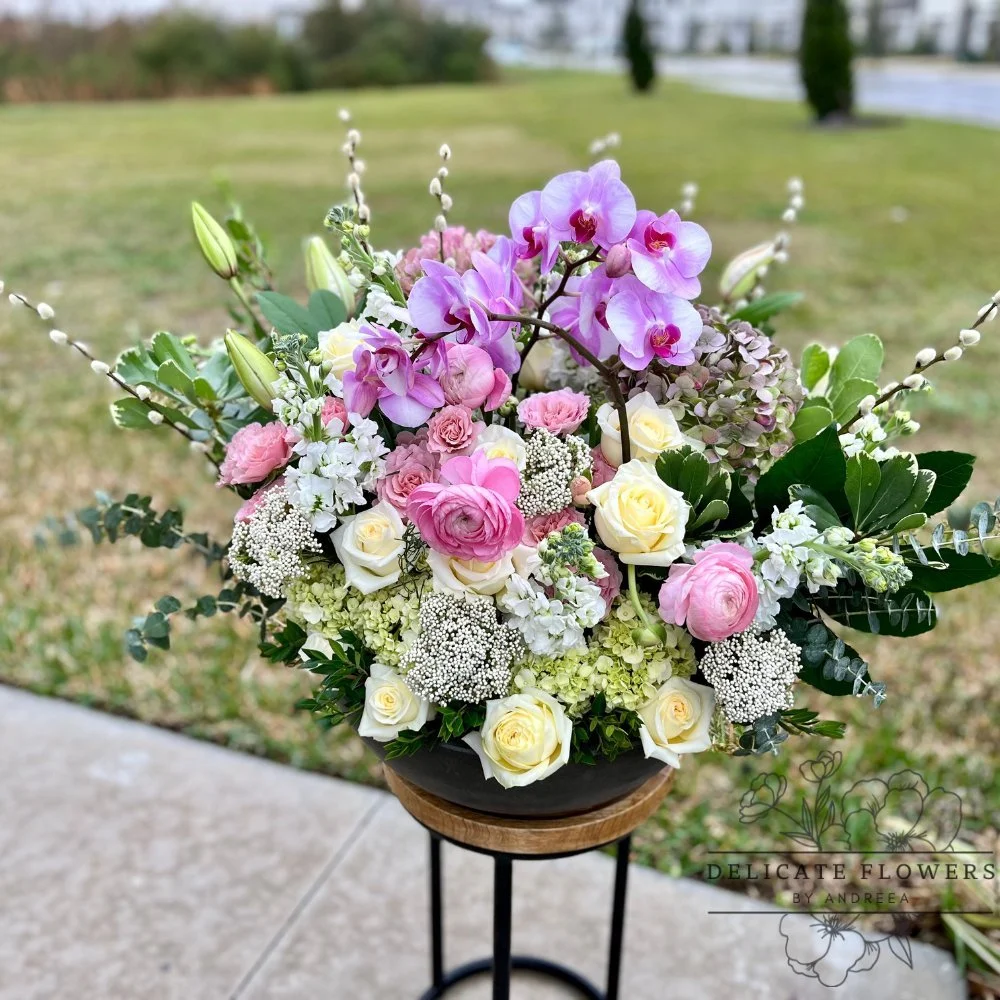
A graceful blend of pink orchids, ivory roses, soft pink ranunculus, and lush greenery, thoughtfully handcrafted by Delicate Flowers by Andreea in Wesley Chapel, Florida. A beautiful example of how flowers and colors come together to create something truly meaningful.
3. Let Color Help Tell the Story
You don't need to know every flower variety to choose a meaningful bouquet.
Start with color.
Soft pinks, peaches, and creams often create a gentle, romantic feeling. Yellow and orange can make an arrangement feel energetic and cheerful. White and green offer a fresh, understated look, while burgundy and deep purple can create a more dramatic impression.
Color combinations matter, too.
For example, sunflowers paired with white roses feel different from sunflowers mixed with vivid orange and red blooms. The flowers may be similar, but the overall mood changes.
When choosing an arrangement, think about the recipient's home, personality, and favorite colors.
Someone who loves minimalist interiors might appreciate a restrained palette. Someone who enjoys bold décor may prefer a more colorful design.
There's no universally perfect combination. The goal is to make the flowers feel like they were chosen for them.
4. The Arrangement Matters as Much as the Flowers
Two bouquets containing similar flowers can look completely different.
A tightly arranged bouquet can feel formal and polished. A loose, garden-style design may feel softer and more natural.
The container also influences the experience.
A traditional vase is familiar and practical. A floral hat box or decorative container can make the presentation feel like a complete gift.
Think about where the recipient might display the arrangement.
For a dining table, a lower design can be easier to enjoy without blocking conversation. For an entryway, a taller arrangement may create more impact.
And if you're sending flowers to someone who might not have a vase available, choosing an arrangement that arrives in its own container can be especially considerate.
You can explore different styles in our collection of handcrafted flower arrangements.
5. Make the Gift Personal Without Overcomplicating It
A meaningful flower gift doesn't require an elaborate story.
Sometimes, one small detail makes all the difference.
Perhaps you remember that your mother loves yellow flowers. Maybe your friend always keeps pink roses on her kitchen table. Or perhaps your partner prefers something unusual rather than a traditional romantic bouquet.
Use what you know.
And don't underestimate the message that accompanies the flowers.
Instead of writing only "Happy Birthday," consider adding a personal detail:
Happy Birthday! I saw these colors and immediately thought of you. Hope today brings you as much happiness as you bring everyone around you.
That kind of message can make even a simple bouquet feel memorable.
If you aren't sure what to choose, tell your florist about the recipient and the occasion. A thoughtful recommendation can be more useful than trying to select every individual flower yourself.
Frequently Asked Questions About Flower Meanings
Do flower colors have universal meanings?
No. Flower symbolism varies by culture, tradition, and personal interpretation. Traditional meanings can provide inspiration, but the recipient's preferences should guide your choice.
What flowers are best when you don't know someone's favorites?
A mixed arrangement in soft, versatile colors is often a good starting point. Consider the occasion, the recipient's style, and whether they have pets before choosing specific flowers.
Is it better to choose a mixed bouquet or one type of flower?
Neither is automatically better. A single-flower bouquet can look elegant and intentional, while a mixed arrangement offers more variety in color, shape, and texture. Choose the style that best suits the person receiving it.
Ready to Send Flowers That Feel Personal?
The most meaningful flowers aren't necessarily the rarest or most elaborate. They're the ones that make someone feel remembered, appreciated, or loved.
At Delicate Flowers by Andreea, we create handcrafted arrangements for life's celebrations, thoughtful gestures, and everything in between.
Whether you're choosing a birthday surprise, an anniversary gift, or flowers simply because someone is on your mind, we'd love to help you find something that feels right.