How to Keep Fresh Flowers Looking Beautiful Longer in Florida
There's something lovely about receiving fresh flowers. You find the perfect spot for them, admire the colors, and suddenly the whole room feels a little brighter.
Then, a few days later, you notice a rose beginning to droop or some petals starting to fall.
It's natural to wonder whether you're doing something wrong.
The good news? A few simple habits can help cut flowers stay beautiful longer. And here in Florida, where a sunny windowsill can get surprisingly warm, knowing where to display your arrangement matters just as much as knowing how to water it.
Here's what you should know.
1. Find the Right Spot Before Anything Else
The first thing most people do when they receive flowers is place them somewhere they'll look beautiful.
That makes sense. But the prettiest spot in the house isn't always the best one for fresh flowers.
Keep your arrangement away from direct sunlight and excessive heat.
That sunny kitchen window might look perfect in the morning, but it can become quite warm as the day goes on.
Cut flowers continue to lose moisture after they're harvested. Warmer conditions generally accelerate that process, which can shorten the time they remain attractive.
Instead, choose a comfortable indoor location with indirect light.
A few places worth avoiding:
Windowsills receiving strong afternoon sunlight.
Kitchen counters next to ovens or other heat-producing appliances.
Areas directly in front of heating or air-conditioning vents.
Tables immediately beside bowls of ripening fruit.
That last one might surprise you.
Ripening fruit releases ethylene gas, which can accelerate aging in certain cut flowers. Keeping your bouquet away from the fruit bowl is a simple precaution.
Our advice for Florida homes: Enjoy your flowers indoors rather than leaving them on a hot porch, patio, or sunny lanai.
2. Start With a Clean Vase
If your flowers arrive as a wrapped bouquet rather than in a vase, you'll need to choose a container.
Before filling it with water, wash it thoroughly with warm, soapy water and rinse it well.
Even a vase that looks clean can contain residue from a previous arrangement.
Why does this matter?
Bacteria in vase water can interfere with a flower stem's ability to absorb water. That can contribute to wilting and shorten the life of your bouquet.
You don't need an expensive vase or special equipment. A simple, clean glass container works beautifully.
One small detail that makes a difference: Choose a vase large enough that the stems aren't packed tightly together.
3. Trim the Stems — But Only When Appropriate
If you've received a loose or hand-tied bouquet that needs to go into a vase, giving the stems a fresh cut can help them absorb water.
Use clean, sharp floral shears or pruning snips.
Trim approximately half an inch to one inch from the bottom of each stem, making a slight angled cut.
Avoid crushing the stems with dull tools.
Once you've trimmed them, place the flowers into fresh water promptly.
What if your flowers arrived already arranged?
This is where the advice changes.
If your florist has created an arrangement in a vase, you generally don't need to pull everything apart as soon as it arrives.
And if the arrangement uses floral foam or another internal support system, removing individual stems may disturb the design.
Instead, follow the care instructions appropriate to that arrangement.
For flowers arranged in floral foam, keeping the foam adequately hydrated is particularly important. Add water carefully as needed, without overflowing the container.
If you're unsure how your arrangement is constructed, ask your florist before taking it apart.
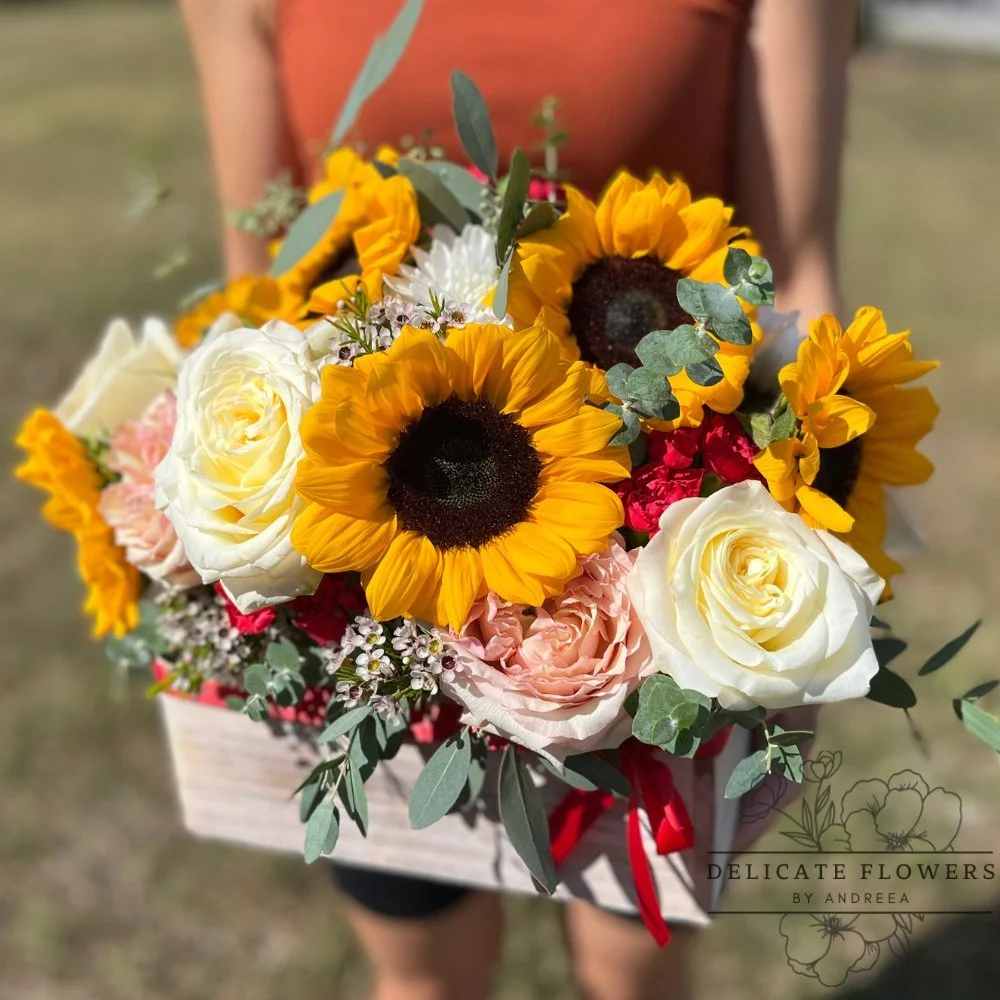
A cheerful mix of sunflowers, ivory and blush roses, and fresh greenery, thoughtfully arranged by Delicate Flowers by Andreea in Wesley Chapel, Florida.
4. Keep the Water Clean
This is one of the most important habits in flower care.
Check your flowers' water level every day.
Make sure the cut ends of the stems remain submerged.
For loose flowers in a vase, changing the water approximately every two to three days is a useful routine.
If the water becomes cloudy or develops an unpleasant smell before then, change it sooner.
When changing the water:
Carefully remove the flowers.
Empty and rinse the vase.
Refill it with clean water.
Recut the stems if appropriate.
Return the flowers to the vase.
It takes only a few minutes, but clean water helps reduce the bacterial buildup that can interfere with hydration.
One more thing: remove any leaves that would sit below the waterline.
Submerged leaves eventually break down and can encourage bacterial growth.
5. Use Flower Food Correctly
You know those little packets of flower food that sometimes come with a bouquet?
They're actually useful.
Commercial flower preservatives typically contain ingredients that help nourish cut flowers, manage water acidity, and limit microbial growth.
But here's the important part:
Follow the instructions on the packet.
More flower food isn't necessarily better. The concentration matters, so use the recommended amount of water.
What about adding sugar, aspirin, or pennies?
You've probably heard at least one of these suggestions.
Homemade flower-care tricks are popular, but they're not necessarily reliable substitutes for a properly formulated floral preservative.
Adding sugar alone, for example, doesn't provide the same balanced combination of ingredients found in commercial flower food.
If you don't have a packet, don't worry.
Start with a clean vase, fresh water, and the other care practices in this guide rather than experimenting with household chemicals.
6. Don't Expect Every Flower to Age the Same Way
A mixed arrangement might contain roses, chrysanthemums, hydrangeas, tulips, or several other varieties.
And they won't necessarily look their best for exactly the same amount of time.
Some flowers naturally have a shorter display life than others. Their condition when harvested, how they were transported, the arrangement's design, and the environment in your home all play a role.
That's why it's difficult to promise that every bouquet will last a specific number of days.
You might notice one flower beginning to fade while the rest of the arrangement still looks beautiful.
That's normal.
If an individual stem has clearly finished blooming, carefully remove it when the arrangement's construction allows.
Sometimes taking away one fading flower makes the remaining arrangement look refreshed.
7. Pay Attention to the Arrangement's Container
Not all floral arrangements are designed to be cared for in the same way.
Flowers in a traditional vase
Check the water level daily. Refresh the water regularly and recut stems when appropriate.
Flowers in floral foam
Keep the foam moist according to the florist's instructions. Don't assume that because the container looks decorative, it doesn't need additional water.
Flowers in a hat box or specialty container
These arrangements may use floral foam, water-filled inserts, or other mechanics.
Before adding water or attempting to remove the flowers, find out how the arrangement was designed.
A little care can prevent spills and help preserve the original shape.
8. If Your Flowers Start Drooping, Check These Things First
A drooping flower doesn't automatically mean the entire bouquet is finished.
Start with three questions.
Is the water level low?
If the cut ends have been exposed, the stems may not be absorbing enough water.
Has the arrangement been sitting somewhere warm?
Move it to a cooler indoor location away from direct sunlight.
Is the vase water cloudy?
For loose flowers, clean the vase, replace the water, and recut the stems.
These steps may help when the problem is related to hydration or water quality.
However, flowers also age naturally. Once a bloom has deteriorated significantly, no amount of trimming or fresh water can reliably restore it.
A Simple Flower-Care Routine Worth Remembering
You don't need to spend much time caring for fresh flowers.
A few small habits make the biggest difference.
When your flowers arrive: Bring them indoors promptly, place them away from direct sunlight, and check whether they need water.
Every day: Check the water level and look for any flowers or foliage that have started to deteriorate.
Every two to three days: For loose flowers in a vase, refresh the water, clean the container, and recut stems when appropriate.
Throughout the arrangement's life: Keep it away from excessive heat and remove fading blooms when you can do so without disturbing the design.
That's really the foundation of good flower care.
Beautiful Flowers Deserve Thoughtful Care
At Delicate Flowers by Andreea, we create handcrafted arrangements for birthdays, anniversaries, celebrations, and those moments when someone simply wants to brighten another person's day.
We also believe that enjoying flowers shouldn't end when the delivery arrives.
Understanding how to care for an arrangement helps you appreciate its changing beauty over the days that follow.
If you're looking to send something special, explore our flower delivery in Wesley Chapel, Florida, or take a look at our Fall Beauty floral arrangement for a warm, seasonal-inspired design.
And if you ever have a question about caring for one of our arrangements, we're happy to help.
Because the best flowers aren't just beautiful when they arrive. They're meant to be enjoyed.