Sending Flowers to a Home with Pets? A Guide for Cat and Dog Owners
Flowers are a wonderful way to celebrate a birthday, welcome someone into a new home, or simply brighten their day.
But if the person receiving your bouquet has a cat or dog, there's one important detail worth considering before you order: not every flower is suitable for a home with pets.
Some popular flowers are classified as non-toxic to cats and dogs, while others can cause illness if eaten. Certain lilies are especially dangerous to cats, even in very small amounts.
The good news? You don't have to give up beautiful flowers.
With a little planning, you can choose an arrangement that looks lovely while being more mindful of the animals who share the recipient's home.
Here's what to know before sending flowers to a pet-owning household in Land O' Lakes, Wesley Chapel, or the surrounding area.
1. Start With Flowers That Are Considered Non-Toxic to Pets
One of the simplest ways to approach pet-conscious flower gifting is to begin with flowers that the American Society for the Prevention of Cruelty to Animals (ASPCA) identifies as non-toxic to cats and dogs.
Several beautiful options are available.
Roses: A Classic Choice
Roses are among the most versatile flowers for gifting.
Whether you prefer soft blush, elegant ivory, cheerful yellow, or traditional red, roses can work beautifully for birthdays, anniversaries, congratulations, and everyday surprises.
The ASPCA classifies roses (Rosa species) as non-toxic to cats and dogs.
However, their thorns can still cause injuries, so an arrangement intended for a home with curious pets should have sharp thorns carefully removed.
Sunflowers: Bright and Cheerful
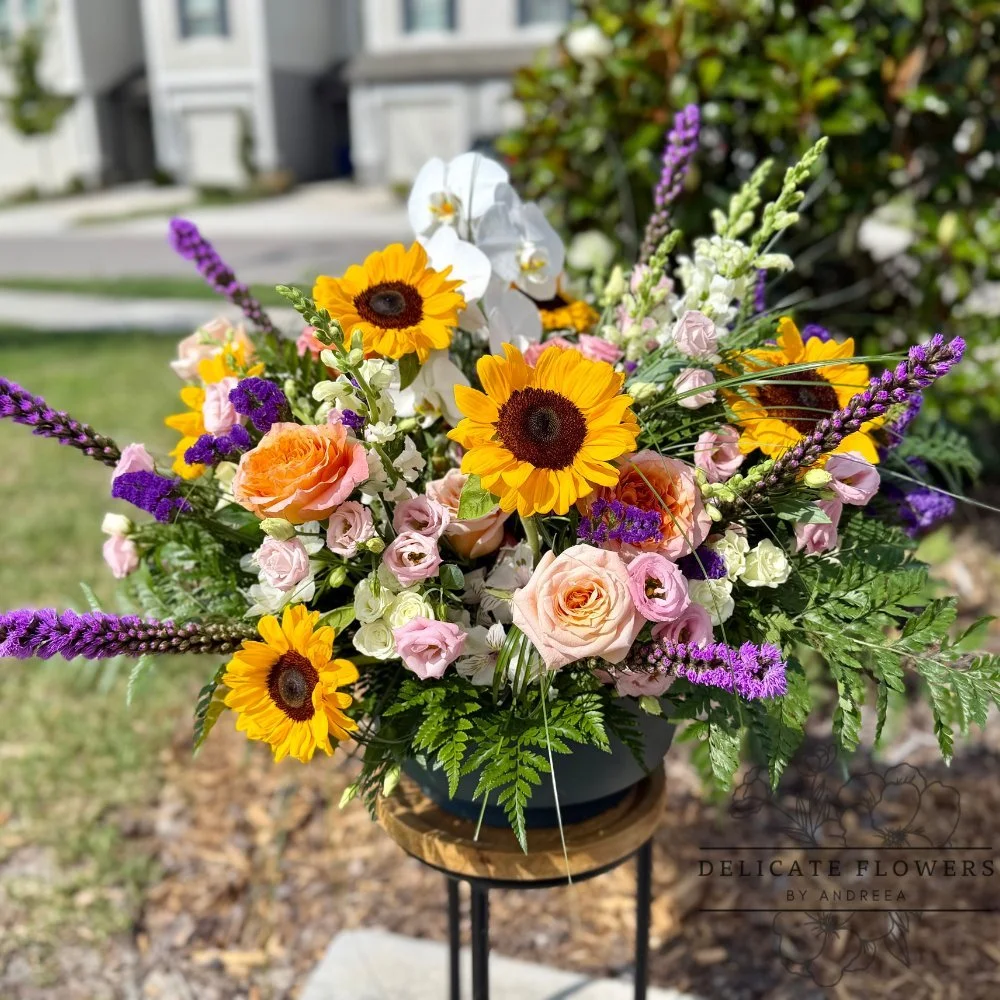
Few flowers create an immediate sense of happiness quite like sunflowers.
Their golden petals make them especially appealing for congratulations, thank-you gifts, and cheerful arrangements.
Sunflowers (Helianthus species) are also listed as non-toxic to cats and dogs by the ASPCA.
A sunflower-focused arrangement can be a lovely choice for someone who appreciates bold, vibrant flowers.
Orchids: Elegant and Distinctive
For someone who prefers a more refined floral style, certain orchids are worth considering.
The ASPCA identifies Phalaenopsis orchids, commonly called moth orchids, as non-toxic to cats and dogs.
Their graceful blooms and beautiful colors make them an appealing option for sophisticated floral gifts.
Be sure to confirm the orchid variety rather than assuming every plant sold under a broad common name has the same classification.
Other Flowers Worth Exploring
Gerbera daisies, zinnias, snapdragons, and freesias are additional flowers the ASPCA identifies as non-toxic to cats and dogs.
They offer different shapes, colors, and textures, allowing for plenty of creativity.
An important distinction: Non-toxic does not mean edible. Chewing or swallowing plant material can still cause vomiting or digestive discomfort, even when a flower isn't classified as poisonous.
The goal is to reduce avoidable risks, not encourage pets to interact with the arrangement.
2. Know Which Popular Flowers to Avoid
Some flowers deserve extra attention when you're sending a bouquet to a household with animals.
Lilies: A Serious Risk for Cats
True lilies (Lilium species) and daylilies (Hemerocallis species) are extremely toxic to cats.
Even small exposures can cause severe kidney injury.
The danger isn't limited to a cat eating a flower. Lily pollen and even water from a vase containing these flowers can pose a serious risk.
If the recipient has a cat, the safest approach is to avoid true lilies and daylilies entirely.
If a cat may have been exposed, seek emergency veterinary care immediately. Don't wait for symptoms to appear.
Chrysanthemums and Tulips
Chrysanthemums, often called mums, are considered toxic to both cats and dogs.
Tulips are also toxic to both species, with the bulbs containing particularly concentrated toxic compounds.
These flowers can be beautiful in traditional arrangements, but they're not ideal choices when you're trying to minimize risks for a curious pet.
Don't Forget the Greenery
One detail people frequently overlook is the foliage used to complete a bouquet.
An arrangement may contain roses or other non-toxic flowers while also including greenery that presents a different risk.
For example, eucalyptus is classified as toxic to cats and dogs by the ASPCA.
That's why it's important to consider every ingredient in the arrangement, not just the main flowers.
For additional guidance, consult the ASPCA's searchable list of toxic and non-toxic plants.
3. Tell Your Florist About the Pets Before Ordering
You don't need to become a botanical expert to send a thoughtful flower gift.
You simply need to share the right information.
When contacting a florist, mention whether the recipient has cats, dogs, or both.
You might say:
"I'm sending flowers to someone who has two cats. I'd love something beautiful, but I'd prefer flowers and greenery that are classified as non-toxic to cats. Could you help me choose?"
This gives the florist an opportunity to discuss appropriate flower varieties and identify ingredients that should be avoided.
It's also helpful to ask whether any substitutions might be made.
A bouquet may be designed around particular flowers, but seasonal availability and sourcing can sometimes require changes.
For a pet-conscious gift, those changes should be discussed rather than assumed to be harmless.
At Delicate Flowers by Andreea, we believe a thoughtful arrangement begins with understanding the person receiving it.
That includes considering the home where the flowers will be enjoyed.
If you're uncertain about the best approach, you can contact us to discuss your floral arrangement before ordering.
4. Think About Where the Flowers Will Be Displayed
Even when an arrangement contains flowers classified as non-toxic, placement still matters.
Cats are natural climbers, and some enjoy investigating anything new brought into the house.
Dogs may be curious about fallen petals, leaves, ribbons, or decorative materials.
A few simple precautions can help:
Choose a stable container. A heavy, secure vase or floral container is less likely to tip over than a lightweight one.
Avoid accessible surfaces. Encourage the recipient to display flowers somewhere their pets cannot reach.
Keep fallen plant material cleaned up. Loose leaves and petals can attract attention from curious animals.
Consider decorative accessories. Ribbons, floral wire, and small ornaments should also be kept away from pets that might chew or swallow them.
Remember that a high shelf isn't necessarily out of reach for a determined cat.
For households where pets routinely chew plants or jump onto countertops, extra caution is worthwhile.
5. A Thoughtful Flower Gift Goes Beyond Appearance
Imagine sending a beautiful bouquet to a friend in Land O' Lakes.
You've chosen their favorite colors, included a heartfelt message, and arranged for delivery on a special day.
Now imagine taking one additional step: telling the florist that your friend has a curious cat.
That small detail can make your gift more considerate.
It shows that you weren't simply choosing something attractive. You were thinking about the recipient's everyday life.
Whether you're sending birthday flowers, celebrating a new home, or surprising someone just because, thoughtful gifting is about more than the arrangement itself.
It's about making someone feel understood.
And sometimes, the details you consider before ordering are what make the gesture especially meaningful.
Frequently Asked Questions About Flowers and Pets
Are roses safe for cats and dogs?
Roses (Rosa species) are classified as non-toxic to cats and dogs by the ASPCA. However, their thorns can cause physical injuries, and eating plant material may still cause digestive discomfort.
Can I send orchids to someone who owns a cat?
Phalaenopsis orchids are classified as non-toxic to cats and dogs. Confirm the exact orchid variety and check any accompanying foliage or decorative materials before ordering.
What should I do if my pet eats a potentially toxic flower?
Contact your veterinarian or an emergency veterinary clinic immediately. You can also contact the ASPCA Animal Poison Control Center at 888-426-4435. A consultation fee may apply.
If a cat has potentially been exposed to a true lily or daylily, treat it as an emergency even if the cat appears healthy.
Looking for a Thoughtful Flower Gift in Land O' Lakes or Wesley Chapel?
A beautiful arrangement should feel personal, meaningful, and appropriate for the person receiving it.
At Delicate Flowers by Andreea, we create handcrafted floral arrangements for birthdays, celebrations, and life's everyday moments, with delivery available in Wesley Chapel, Land O' Lakes, and surrounding communities.
If you're ordering for someone who owns pets, tell us before selecting your arrangement so we can discuss the flowers and greenery you're considering.